Biomic Stain & Glaze System
Start with the case.
Not the kit.
Aidite Biomic is a family of dental-laboratory materials for selected zirconia workflows. Color Opaque helps manage internal dark-background influence before sintering. Stain & Glaze—and Biomic Gum for visible prosthetic gingiva—provide external characterization after sintering. Not every case needs every module.
Which Biomic route does your case need?
Begin with the production problem and choose the lowest-risk next step. “No Biomic treatment” and escalation are legitimate outcomes.
Complete the optical-risk checklist
A responsible opacity or material decision requires the substrate, zirconia, shade and thickness variables that influence the final appearance.
Review the required inputsEvaluate an external trial kit
The case may need external color, glaze, fluorescence, texture or limited refinement—but not Color Opaque or Gum.
Plan an external trialRun a controlled Gum pilot
Tooth and tissue effects can be coordinated externally, while full-arch drying, firing and cross-arch consistency require validation.
Build a full-arch pilotRequest a dark-substrate case review
Internal optical risk should be assessed before zirconia sintering and tested against the exact zirconia, regional thickness and background.
Evaluate Color OpaqueEscalate beyond Biomic
Finishing materials should not be asked to correct an unsuitable material, inadequate design, insufficient thickness or structural problem.
Review escalation criteriaInternal and external Biomic treatments occur at different stages.
Color Opaque acts before zirconia sintering. Stain & Glaze and Gum act on the external fired surface after sintering.
Biomic Color Opaque
Location: Intaglio of presintered zirconia
Primary function: Helps manage the influence of a dark preparation, metal component, abutment or Ti-base.
Biomic Stain & Glaze
External tooth shade effects, glaze, fluorescence, texture and limited form refinement, followed by a ceramic firing.
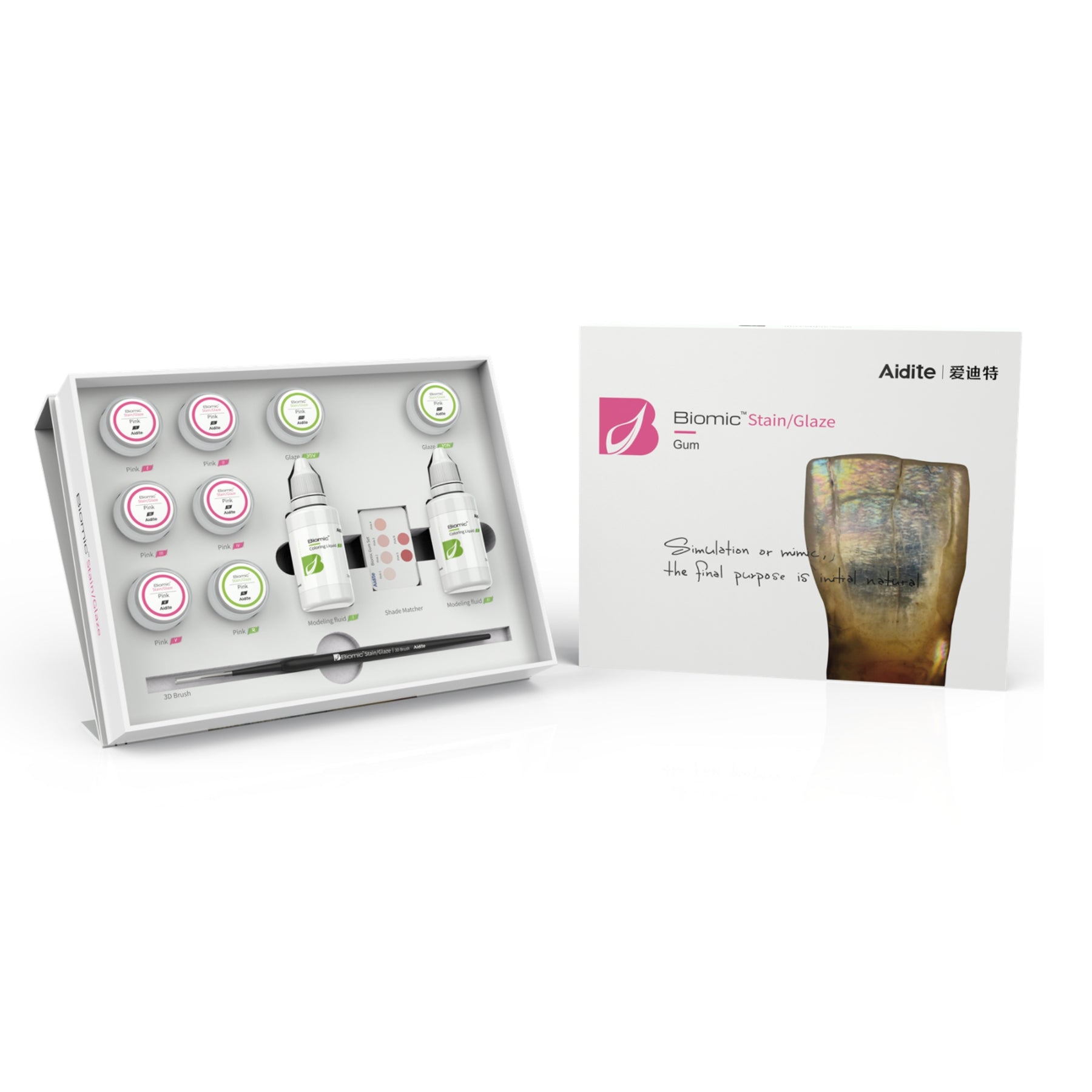
Biomic Gum
External gingival color, vascular effects, texture and limited dimensional tissue effects, followed by a ceramic firing.
What determines the final appearance of zirconia?
The visible result comes from a stack of interacting variables—not from one liquid, paste or glaze. The earlier the laboratory identifies the optical risk, the less pressure it places on late-stage finishing.
What information is required before selecting Biomic?
Do not select Color Opaque—or attempt to compensate externally—until the laboratory understands what lies beneath the zirconia and how the restoration is designed.
Optical-Risk Intake Checklist
Confirm the following before making an opacity or characterization decision:
- Target tooth shade.
- Gingival shade and visible tissue zones, where applicable.
- Preparation, post, core, abutment or Ti-base material and shade.
- Clinical photographs or a representative die or background.
- Exact zirconia product, class, shade and relevant lot information.
- Planned facial, cervical and incisal thickness.
- Cement or background information when known.
- Restoration type and span.
- Intended conventional or rapid sintering program.
- Required external shade, texture, fluorescence and gloss effects.
When should a laboratory evaluate Biomic Stain & Glaze?
For routine monolithic zirconia over a normal substrate, the relevant Biomic function is usually external characterization.
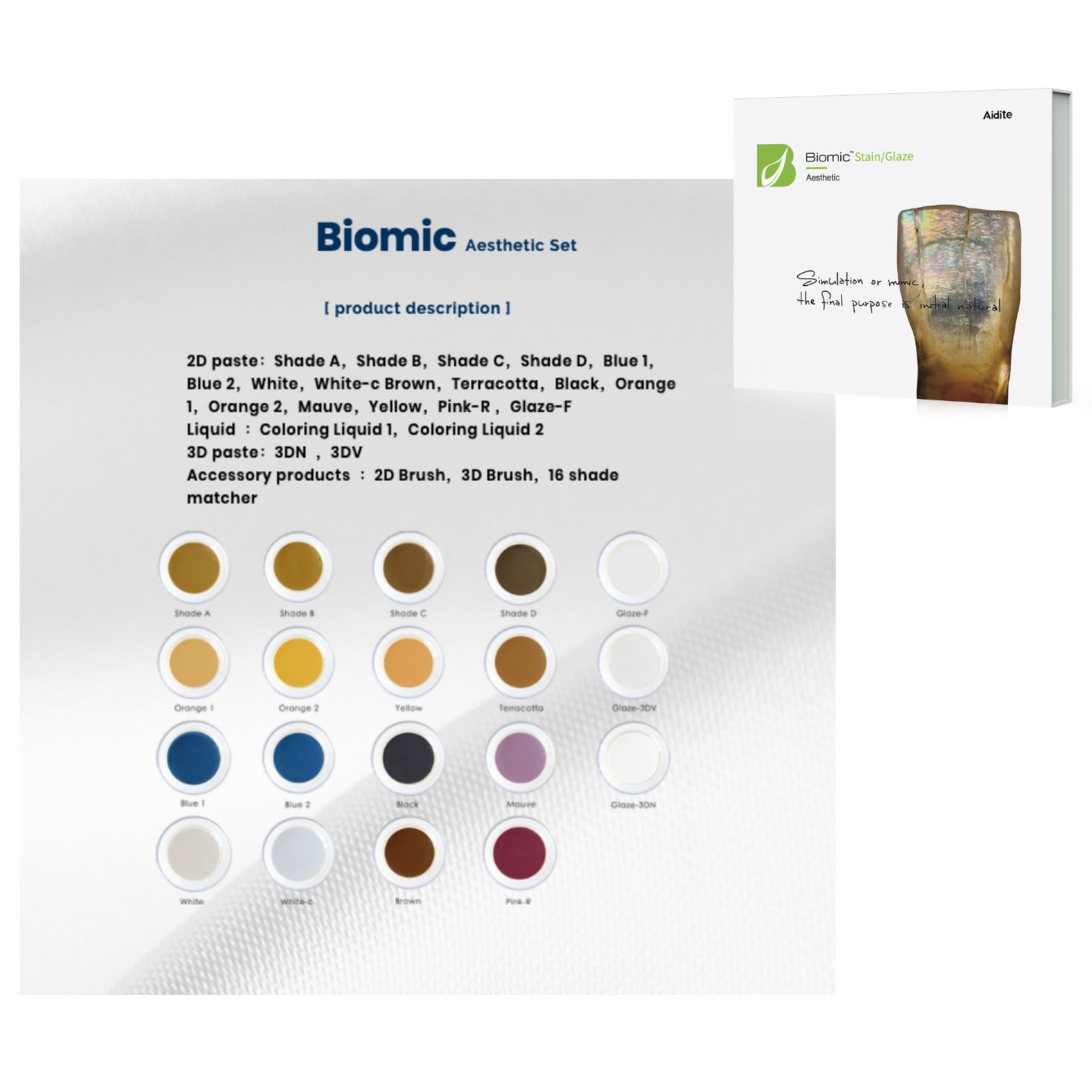
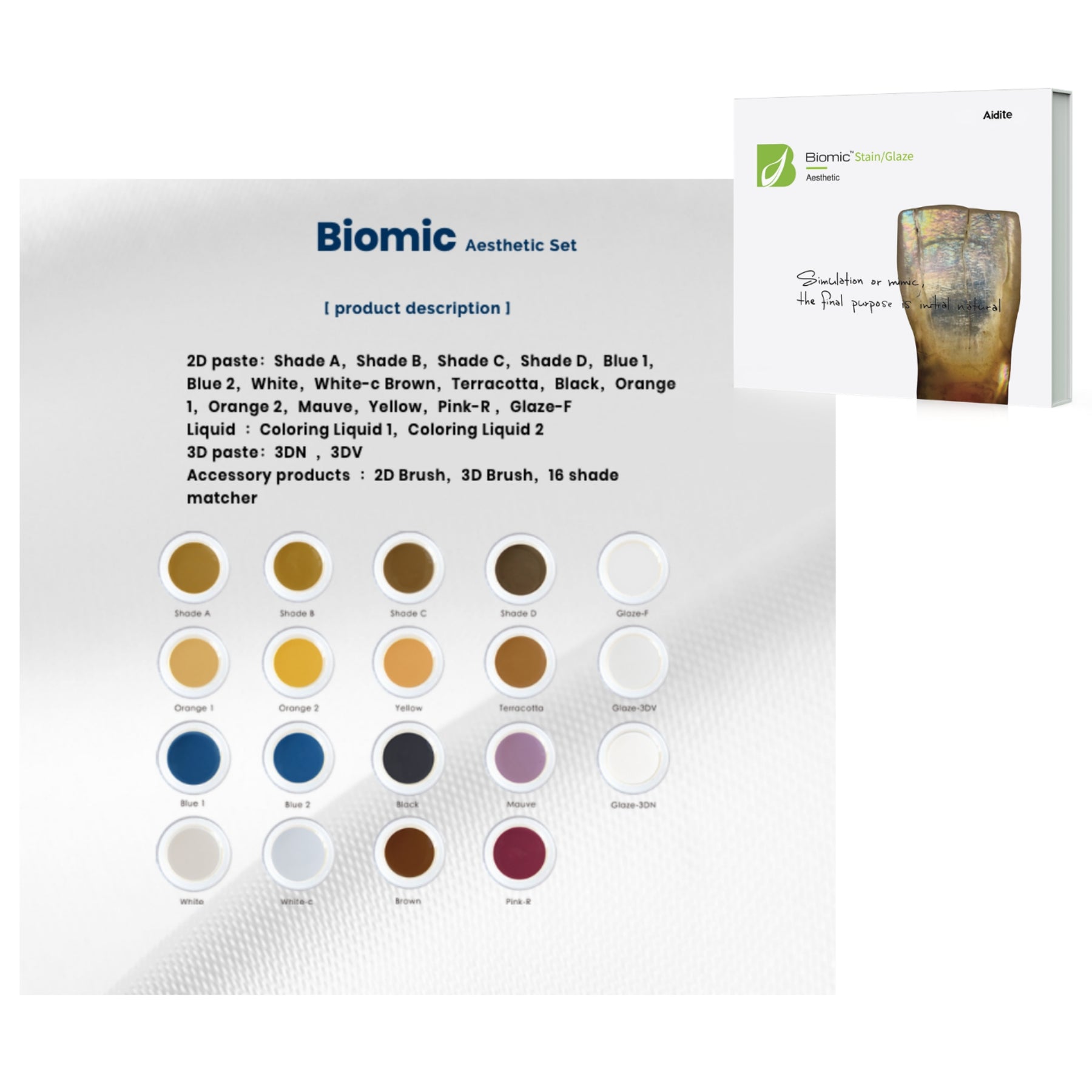
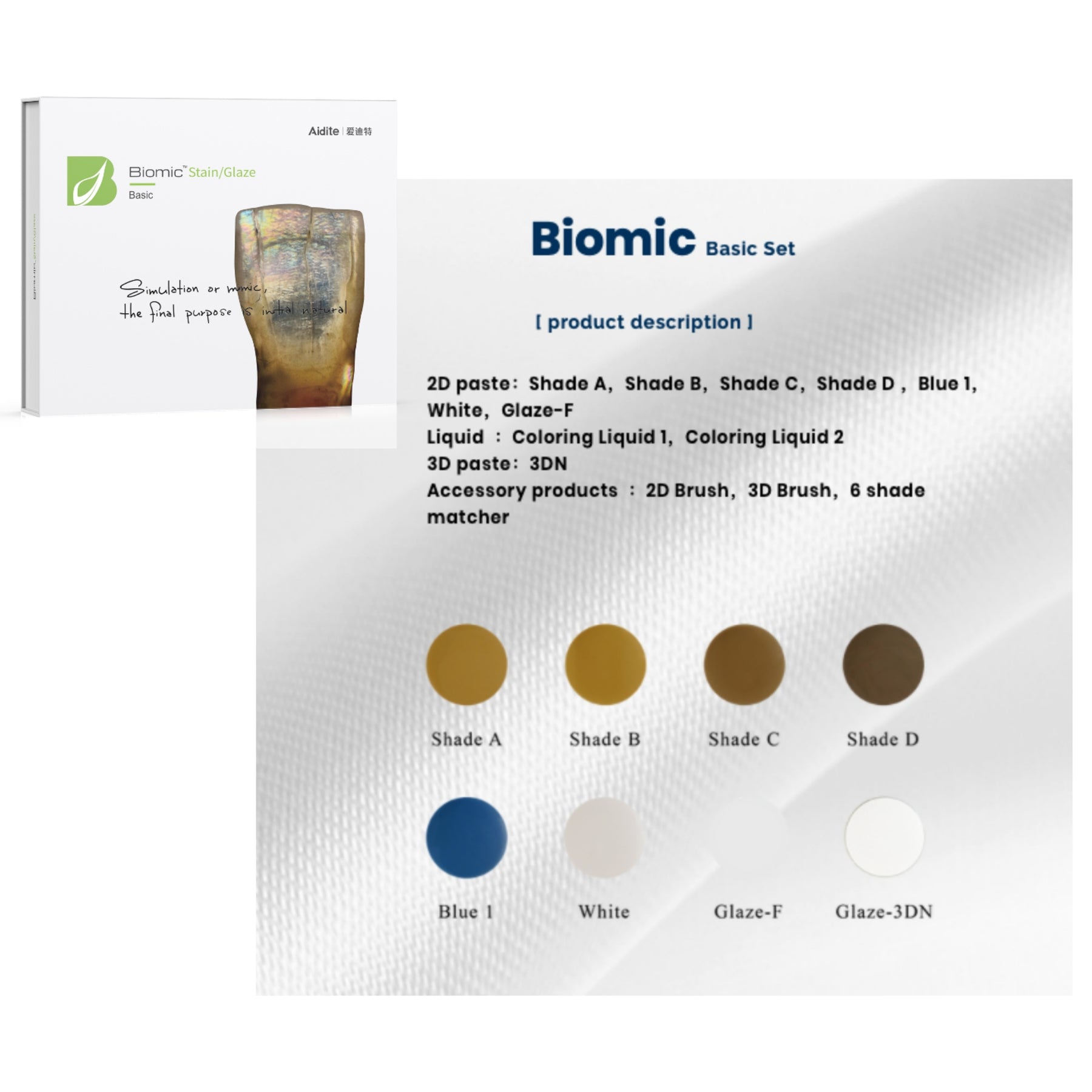
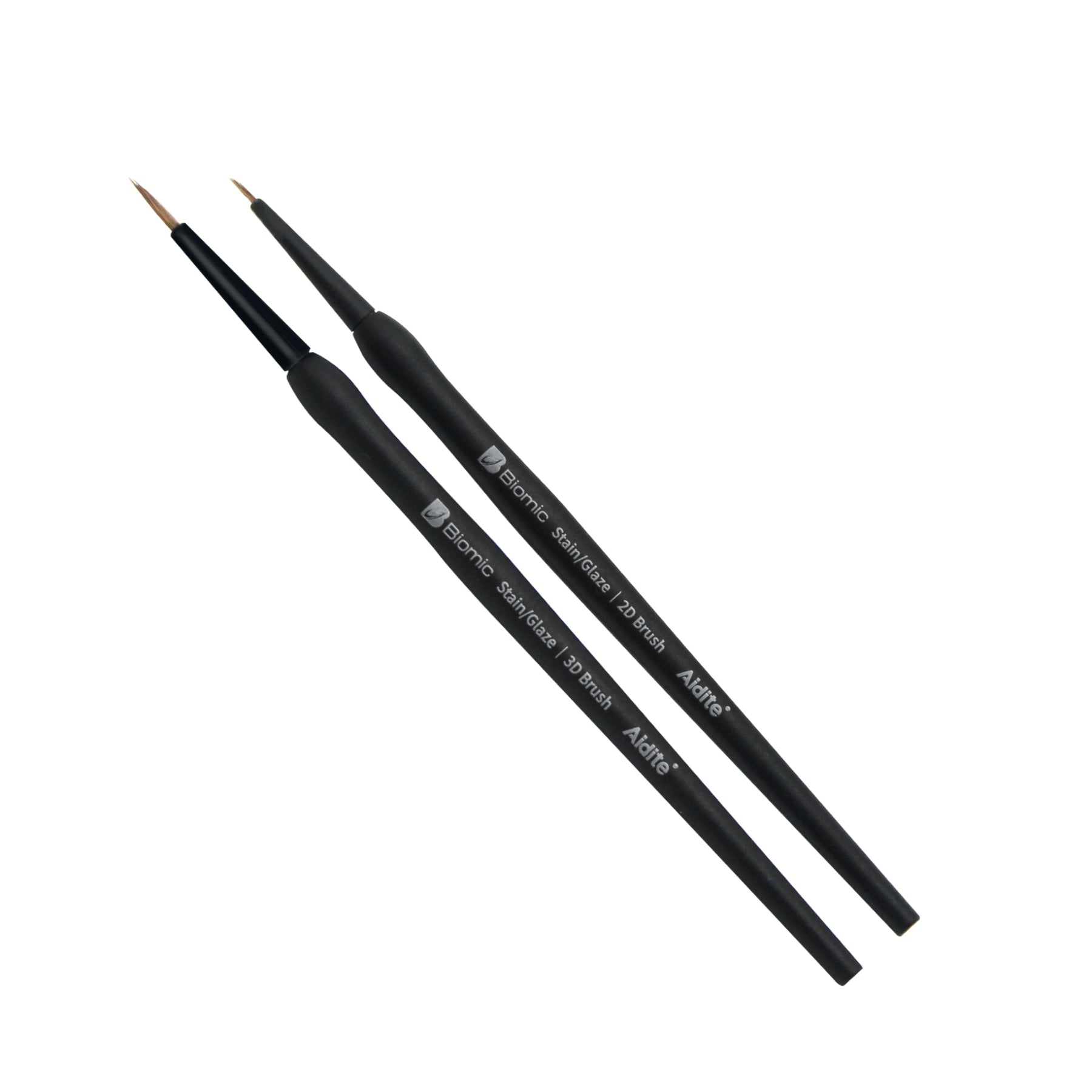
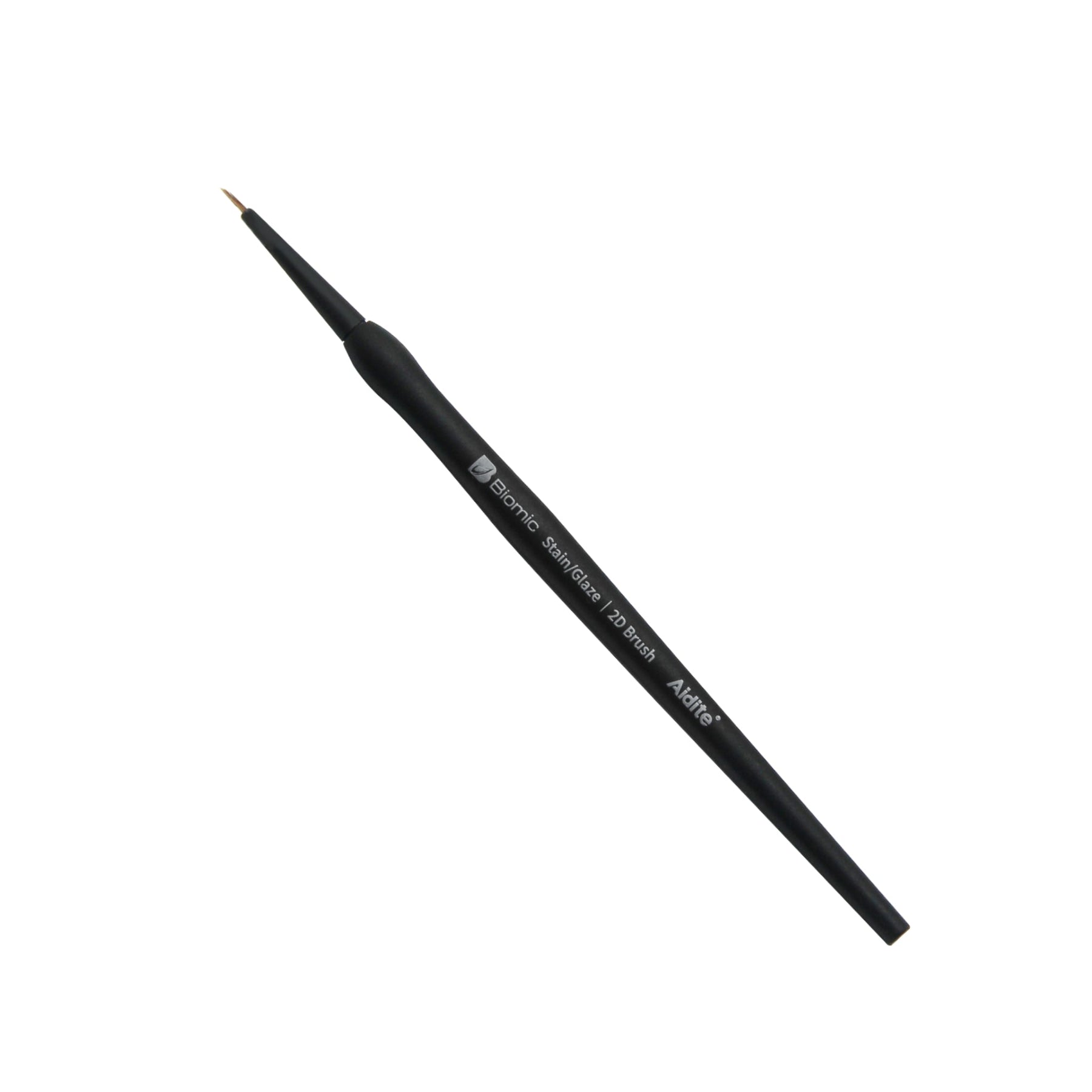
2D pastes
Thin external color and optical effects.
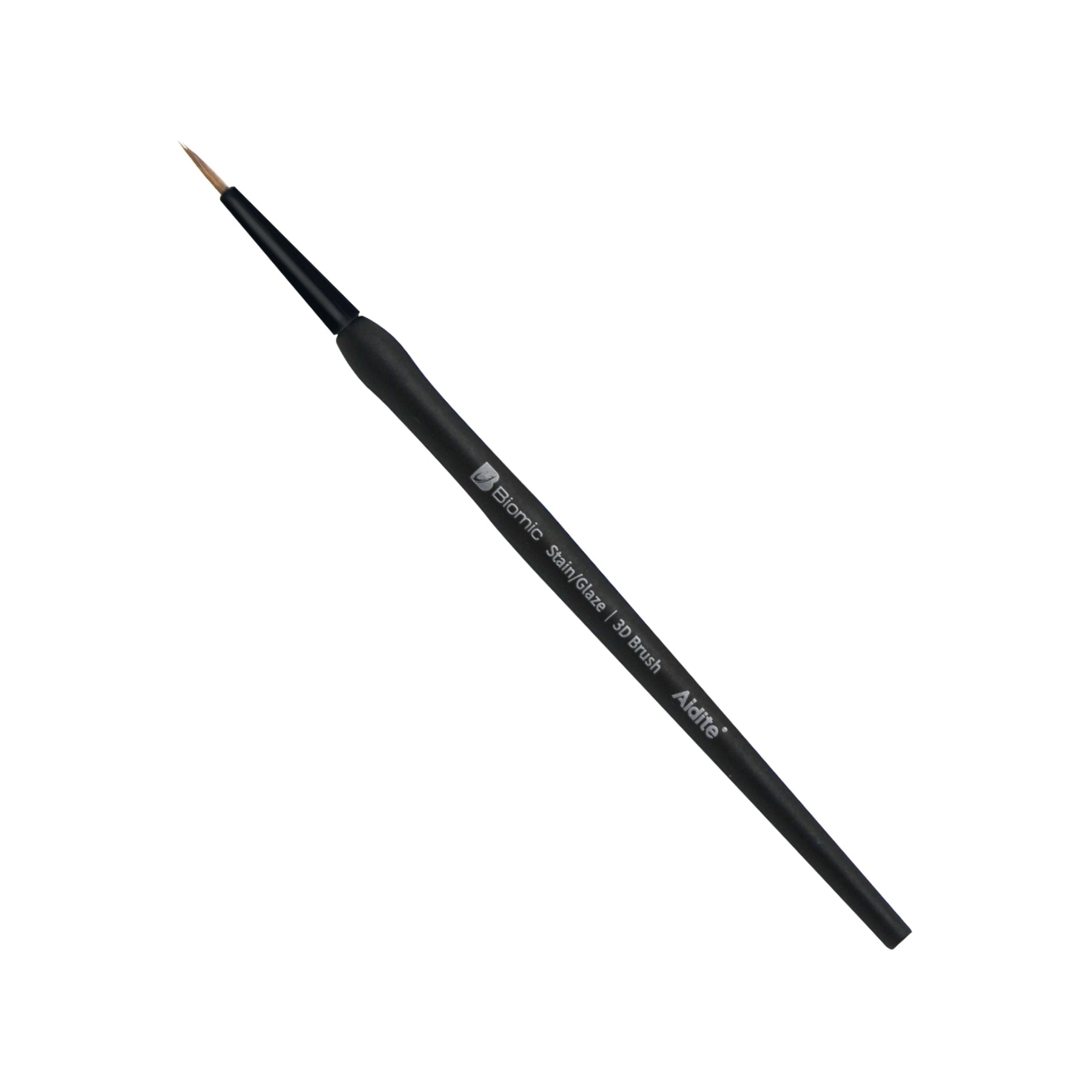
3D pastes
Higher-body ceramic effects for texture and limited contour refinement.
Glaze-F
A glaze designed to add gloss and fluorescence.
Fluids + accessories
Materials used to manage application and handling according to the applicable instructions.
Terminology: “2D” and “3D” are Aidite product classifications. They do not refer to digital design or 3D printing. Selected stain, effect and glaze steps may be combined in one ceramic firing, but one firing is a case-dependent option—not a universal production promise.
How to run an external trial
Use representative units and record:
- Active application time and total elapsed time.
- Materials, shades and recipes used.
- Firing program and number of firings.
- Corrections and their causes.
- Shade, value, texture, gloss and fluorescence.
- Contact or occlusal adjustment.
- Polishing after adjustment.
- Technician confidence and recipe reproducibility.
Can Biomic 3D replace ceramic layering?
No. Biomic 3D supports external texture and limited form refinement. It should not be described as structural ceramic buildup or used to compensate for a deficient framework, large missing contour or major CAD-design error.
When should a laboratory evaluate Biomic Gum?
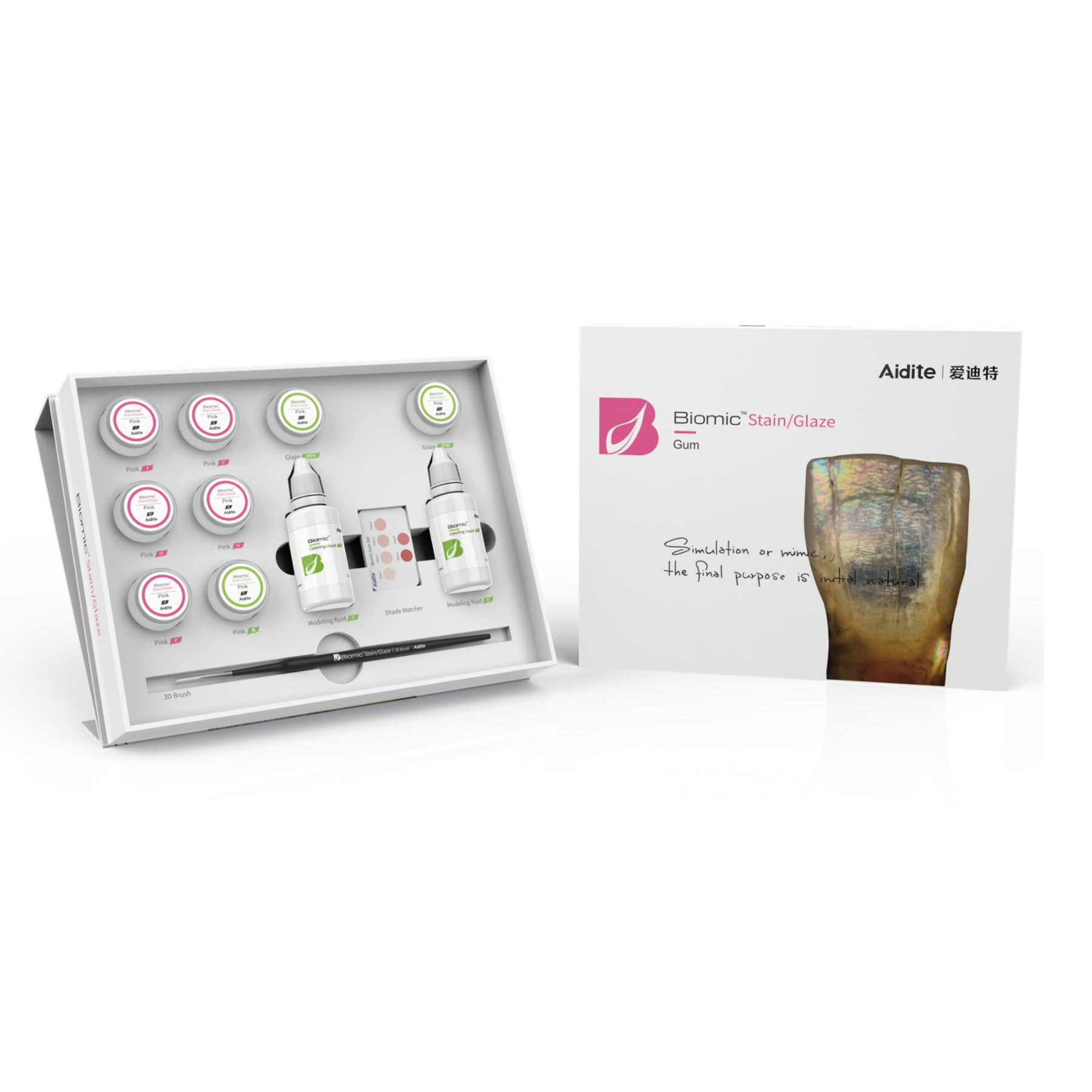
Biomic Gum is relevant when a restoration includes visible prosthetic gingiva—especially for implant and full-arch laboratories.
External tissue functions
- Main gingival color.
- Free-gingival and transition zones.
- Vascular effects.
- Bone-contour cues.
- Stippling and texture.
- Gloss relationships between tooth and tissue.
Full-arch pilot checkpoints
- Tooth-and-tissue zoning.
- Thin color versus higher-body gingival effects.
- One firing versus staged application where instructions permit.
- Drying, material thickness, support and furnace position.
- Heating, cooling and thermal-mass behavior.
- Cross-arch shade, texture and gloss consistency.
- Number and cause of corrections.
- Active time, total time and inter-technician variation.
Can Color Opaque help with titanium or a dark preparation?
Color Opaque is designed to help manage dark-background influence through zirconia. It is applied to the intaglio of presintered zirconia before sintering—not as an external liner after sintering.
Why a case review comes first
Titanium, Ti-bases, metal cores, dark abutments and severely discolored preparations can influence the final appearance of translucent zirconia. Independent studies indicate that substrate, zirconia composition, thickness, cement or background and surface treatment can all affect the visible result.23
FDA documentation describes Color Opaque as an internal treatment for presintered zirconia and identifies Type I color components and Type II opaque. The clearance summary recommends a 1:1 combination.1
Manufacturer-reported figures. The published brochure does not provide enough detail to generalize these values to every zirconia, thickness, shade, background, application or sintering program.
What cannot be assumed
- That every dark substrate will become invisible.
- That original shade or translucency will remain unchanged.
- That every white, preshaded, multilayer, 3Y, 4Y or 5Y zirconia will respond identically.
- That every rapid-sintering cycle is compatible.
- That the treatment can correct an inadequate framework or insufficient thickness.
- That translucency can be restored after excessive opacity is applied.
Does Color Opaque change zirconia translucency?
Yes, according to Aidite’s published data. The intended masking mechanism includes a reduction in translucency. A treatment that improves masking may also change value, lightness or chroma. Evaluate masking and value together rather than assuming that the original optical appearance remains unchanged.
Controlled validation sequence
- Confirm the current US instructions and exact zirconia/process compatibility.
- Reproduce the relevant titanium, metal or dark-preparation background.
- Use the planned zirconia product, shade and regional thickness.
- Compare an untreated control with the permitted treatment.
- Evaluate value and translucency—not masking alone.
- Record sintering program, application, lot and technician.
- Escalate when masking remains inadequate or the result becomes too opaque.
Lowest-risk next step
Request a dark-substrate review before introducing Color Opaque into routine production.
When should a laboratory choose a different workflow?
Biomic does not solve every esthetic or production problem. The correct recommendation may be neither Color Opaque nor additional external characterization.
Escalate when…
- The zirconia is too translucent for the substrate and available thickness.
- The cervical or facial zone is too thin.
- The framework or CAD design lacks required support or form.
- The abutment or Ti-base strategy creates unacceptable optical risk.
- A different cement or background strategy is required.
- The desired anatomy exceeds limited 3D refinement.
- The case requires layered optical depth or substantial ceramic buildup.
- The exact treatment, zirconia or firing combination is not supported.
Possible restorative responses
- Choose a different zirconia composition, translucency or shade.
- Increase permitted restoration thickness.
- Change the abutment or restorative design.
- Choose a different cement strategy with the clinician.
- Redesign and remill.
- Use a layered tooth or gingival ceramic workflow.
How does a case move through the Biomic workflow?
Internal opacity is one decision in a larger sequence. External characterization is another.
- Case intakeCollect shade, substrate, restoration and process information.
- Optical-risk assessmentIdentify dark-background and translucency risk.
- Material + thickness decisionChoose zirconia, shade, design and regional thickness.
- Internal-opacity decisionUse Color Opaque, do not use it, or escalate.
- Zirconia sinteringFollow the supported program for the selected zirconia.
- External characterizationApply tooth and/or gingival effects as indicated.
- Ceramic firingFollow the current compatible firing instructions.
- Adjustment + polishingRestore the appropriate surface after adjustment.
- QC + releaseEvaluate shade, value, texture, gloss and case acceptance.
What is verified—and what is not?
Use the product functions that are supported. Validate workflow and business benefits inside your own laboratory.
What the evidence supports
- Color Opaque is intended for the intaglio of presintered zirconia.
- Stain & Glaze and Gum are external, post-sintering characterization materials.
- 2D and 3D are Aidite classifications for different external functions.
- Glaze-F is designed to add gloss and fluorescence.
- Selected external effects may be combined in one firing when the current instructions and case permit.
- Substrate, zirconia, thickness, cement or background and surface treatment can affect final appearance.
What should not be assumed
- That the products form one technically integrated chemistry.
- That combined use reduces labor, turnaround, training, corrections, rework or remakes.
- That Color Opaque works on every zirconia or rapid-sintering program.
- That original shade or translucency remains unaffected.
- That Biomic 3D replaces layered ceramic.
- That every full arch can be completed predictably in one firing.
- That the family guarantees technician-to-technician repeatability.
Aidite Biomic: direct answers for dental laboratories
What is the Aidite Biomic system?
Is Biomic Color Opaque used before or after zirconia sintering?
Can Color Opaque completely hide a titanium abutment?
Does Color Opaque change zirconia translucency?
What is the difference between Biomic 2D and 3D?
Can Biomic 3D replace layered ceramic?
What does Biomic Glaze-F do?
Can Biomic stain, effects and glaze be fired together?
Can Biomic Gum be used for a zirconia full arch?
Which Biomic kit should a laboratory start with?
Does Biomic make zirconia characterization easier?
When should a laboratory escalate beyond Biomic?
Evaluate the relevant stage—not the entire family by default.
For routine tooth characterization, start with a focused external trial. For visible gingival work, run a controlled tooth-and-Gum pilot. For implant or dark-substrate cases, assess internal optical risk before sintering and validate Color Opaque against an untreated control.